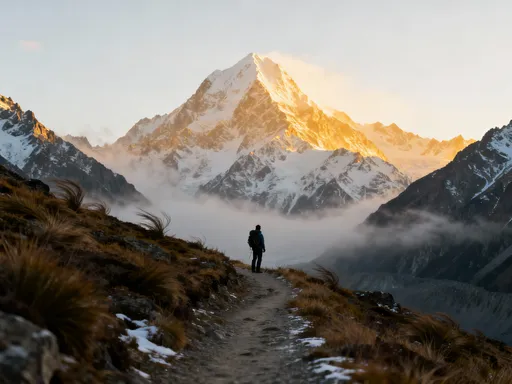
This Is Why Sun City’s Wild Terrain Feels Like Magic
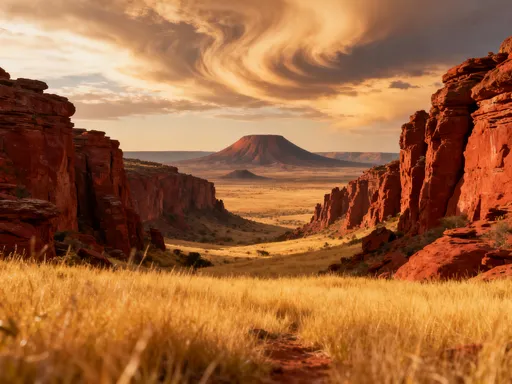
You know that feeling when a place just gets you? Sun City, South Africa, hit me like a lightning bolt. Beyond the luxury resorts and golf courses, the raw, red-rock canyons and golden grasslands tell an ancient story. The terrain isn’t just scenic—it shapes the culture, the rhythm of life, everything. I never expected such power from a landscape. It’s not just a getaway; it’s a deep, soul-stirring experience rooted in nature’s drama. Here, the earth speaks in colors and contours, in silence and storm, inviting travelers not only to see but to feel. This is not a destination built for spectacle alone, but one born from geological wonder and human resilience, where every path leads to discovery and every vista holds memory.
Arrival: First Glimpse of a Geological Dream
As you approach Sun City from the south, the Highveld’s endless flatlands stretch before you like a vast, sun-bleached canvas. Then, almost imperceptibly at first, the horizon begins to rise. The earth folds upward into bold ridges and rounded peaks, breaking the monotony with a sculpted elegance that feels both ancient and alive. This is the Pilanesberg, a mountain range unlike any other—formed not by continental collision, but by a colossal volcanic eruption over a billion years ago. The circular structure, known as an alkaline ring complex, is one of only three of its kind on Earth, and the most accessible for study and exploration. Its concentric ridges, carved by time and weather, create a natural amphitheater cradling the resort and surrounding wilderness.
Driving through the gates of Sun City, the contrast is immediate and striking. On one side, manicured lawns, sparkling pools, and colonial-style architecture suggest refinement and ease. On the other, the wild terrain asserts itself—red sandstone cliffs glowing at sunset, termite mounds rising like sentinels in the grass, and thorny acacia trees standing guard over dry riverbeds. This juxtaposition is not accidental. The resort was designed to coexist with the landscape, not conquer it. Roads curve around boulders, buildings nestle into slopes, and views are framed to highlight the untamed beauty beyond the manicured edges. It is a rare example of human development that acknowledges the supremacy of nature.
Geologists regard the Pilanesberg as a living textbook of Earth’s early history. The volcanic activity that formed it created mineral-rich soils and unique rock formations, including syenite and carbonatite, which are still studied today for insights into planetary formation. But for the visitor, the science enhances the sense of awe rather than diminishes it. Knowing that you stand on the remnants of an eruption older than most life on land adds a quiet reverence to every step. The land does not shout; it whispers across eons, reminding you of how small we are, and how brief our presence. Yet, in that humility, there is a strange comfort—a sense of belonging to something far greater.
The Land That Shapes Culture
The story of Sun City cannot be told without honoring the people who first called this land home. Long before luxury hotels and game drives, the Tswana communities lived in harmony with the rugged terrain of the Pilanesberg. Their ancestors recognized the mountains not just as shelter or resource, but as sacred keepers of wisdom and identity. Oral traditions speak of hills where ancestors dwell, of springs where spirits gather, and of rock formations that mark the passage of time and the lessons of survival. The land was never merely a backdrop—it was a teacher, a protector, and a relative.
Traditional Tswana farming methods reflect a deep understanding of the region’s challenges. The rocky soil and seasonal droughts demanded innovation. Crops like sorghum and millet were cultivated in dryland plots, rotated carefully to preserve nutrients. Livestock were herded along seasonal routes, following the sparse rains and grazing patterns shaped by the terrain. Even today, in villages surrounding the park, elders speak of reading the land like a map—knowing where dew collects in the early morning, where certain plants bloom after a storm, and which ridges signal the approach of winter winds. This knowledge, passed down through generations, is not folklore but practical wisdom forged by necessity and respect.
Cultural expression in the region is equally rooted in the landscape. Traditional homes, known as rondavels, are built with locally quarried stone and thatched roofs made from grass harvested in the bushveld. The circular shape mirrors the natural contours of the hills, and the use of earth-toned materials allows structures to blend seamlessly into the environment. Crafts such as pottery and beadwork often incorporate symbols drawn from nature—the spiral of a snail shell, the pattern of a leopard’s coat, the flow of a dry riverbed. These are not decorative choices; they are acts of remembrance, ways of carrying the land’s spirit into daily life. To live here is to be in constant dialogue with the earth, listening for its rhythms and responding with care.
Pilanesberg National Park: Where Nature and Heritage Meet
Encircling Sun City like a protective embrace, Pilanesberg National Park is one of South Africa’s most remarkable conservation success stories. Once a degraded cattle ranch, the land was restored in the 1970s through a massive wildlife relocation effort known as Operation Genesis—one of the largest game translocations in history. Over 6,000 animals, including elephants, lions, and white rhinos, were carefully moved into the newly established park, rewilding an ecosystem that had been silent for decades. Today, the park spans over 500 square kilometers and supports more than 10,000 animals representing 140 species, making it a sanctuary of biodiversity and a living testament to what is possible when humans choose restoration over exploitation.
Game drives through Pilanesberg reveal a landscape of dramatic contrasts. Deep valleys give way to open savannahs, rocky outcrops rise above grassy plains, and seasonal wetlands attract flocks of waterbirds. The varied terrain creates microhabitats that support a rich tapestry of life. A leopard may rest in the shade of a koppie at dawn, while a herd of buffalo moves through a dry riverbed below. At Mankwe Dam, hippos grunt in the shallows, and fish eagles call from the treetops. The park’s circular structure means that no two drives are ever the same—each route offers a new perspective on the land’s complexity.
What sets Pilanesberg apart is its commitment to integrating ecological and cultural education. At the Bakgatla Cultural Village and nearby interpretive centers, visitors learn not only about animal behavior and conservation efforts but also about the human history woven into the landscape. Exhibits feature traditional tools, medicinal plants, and stories of coexistence between people and wildlife. Rangers, many of whom grew up in surrounding communities, share personal anecdotes about growing up near the park—how they learned to track animals by footprints, how elders taught them to avoid certain areas during leopard season, and how the return of elephants was seen as a sign of balance restored. This holistic approach transforms a wildlife tour into a journey of understanding, where nature and culture are seen not as separate, but as deeply interconnected.
Beyond the Casino: Authentic Encounters in the Bushveld
For many, Sun City conjures images of glittering casinos, world-class golf, and high-stakes entertainment. While these attractions have their place, they represent only one layer of the region’s identity. A more meaningful experience awaits just beyond the resort’s borders, in the villages and community projects that offer authentic cultural exchange. These initiatives, led by local cooperatives and heritage organizations, provide visitors with the chance to engage with traditions that have been shaped by centuries of living in this unique terrain.
One such experience is a visit to a traditional dance and music gathering, where performers in vibrant attire move to the rhythm of drums and rattles made from gourds. The dances are not performances for tourists—they are expressions of history, telling stories of migration, harvest, and celebration. A young guide named Thandi explained that the stomping steps mimic the movement of elephants, a tribute to the animal’s strength and wisdom. Songs are sung in Setswana, the local language, and elders translate key phrases, inviting listeners to understand the meaning behind the melody. These moments are not staged; they are shared, offered with pride and warmth.
Responsible tourism plays a crucial role in sustaining these cultural practices. Entrance fees support local schools, healthcare initiatives, and craft cooperatives that empower women and youth. Visitors are encouraged to ask questions, participate respectfully, and avoid treating these experiences as spectacles. Photography is permitted only with permission, and sacred spaces are treated with reverence. The goal is not to preserve culture as a museum exhibit, but to support its evolution in a way that honors its roots. When travelers engage with intention, they become part of a larger story—one of mutual respect and shared humanity.
The Rhythm of the Seasons: How Climate and Landscape Dance Together
The magic of Sun City is not constant—it shifts with the seasons, revealing different faces of the land throughout the year. The region has a semi-arid climate, with hot summers and cool, dry winters. From May to September, the landscape turns golden and dusty, the grass brittle underfoot, the air crisp at dawn. This is the dry season, when water sources shrink and animals gather around permanent rivers and dams. It is also the best time for game viewing, as wildlife concentrates in predictable patterns, making sightings more frequent and dramatic.
Then, in October or November, the first thunderstorms arrive. They roll in from the east, dark clouds building over the Magaliesberg, lightning splitting the sky. When the rain finally falls, it does so with intensity, soaking the cracked earth in minutes. Overnight, the land transforms. Green shoots emerge, birds return, and the air fills with the scent of wet soil and blooming wildflowers. This is the beginning of the wet season, a time of renewal and abundance. Farmers plant their crops, herds move to fresh grazing, and the cycle of life accelerates.
These seasonal shifts are not just meteorological events—they are deeply embedded in local culture. Traditional calendars are based on natural signs: the flowering of the aloes signals the start of the planting season, the migration of certain birds marks the approach of rain, and the position of the stars guides nighttime travel. Even today, many families in surrounding communities follow these rhythms, aligning their lives with the land’s pulse. For the visitor, experiencing this cycle—whether watching a storm gather on the horizon or walking through a field of dew-covered grass at sunrise—creates a profound sense of connection. Time slows. You begin to notice small things: the way light changes on a rock face, the sound of a gecko at dusk, the coolness of shade beneath a jackalberry tree. These are the quiet moments that stay with you, long after the trip ends.
Designing with the Land: Sun City’s Architecture and Terrain Harmony
One of the most remarkable aspects of Sun City is how its built environment respects the natural one. Unlike many resort developments that flatten the land and impose artificial order, Sun City’s architects chose to follow the contours of the Pilanesberg. Buildings are nestled into slopes, roads curve around rock formations, and rooftops mimic the shape of the surrounding hills. The result is a resort that feels less like an intrusion and more like an extension of the landscape.
The centerpiece, the man-made Valley Lake, is a masterclass in integration. Rather than carving a flat basin, engineers shaped the lake to follow the natural depression of the valley, allowing it to blend seamlessly with the terrain. At sunrise, the water reflects the red cliffs like a mirror, creating the illusion that the lake has always been there. Surrounding villas and lodges use local stone, timber, and earth-toned finishes, ensuring that structures do not dominate but complement. Even the iconic Palace of the Lost City, with its elaborate towers and waterfalls, draws inspiration from African mythology and natural rock formations, avoiding the trap of cultural appropriation by grounding its design in regional storytelling.
This approach stands in contrast to more invasive developments seen elsewhere in Africa and beyond, where ecosystems are bulldozed for luxury amenities. Sun City’s design philosophy recognizes that true luxury is not in dominance, but in harmony. When a guest steps onto a balcony and sees a kudu grazing below, or hears the call of a loerie in the morning, the experience is not manufactured—it is earned through respect. Architecture, in this context, becomes a form of stewardship, a way of saying: we are guests here, and we honor the land that hosts us.
Why This Place Stays With You
Months after leaving Sun City, certain images remain vivid: the silhouette of a giraffe against a crimson sunset, the sound of a lion’s roar echoing through the valley, the warmth of a village elder’s handshake as he shared a story of his childhood in the bush. These are not just memories of a vacation, but imprints of a deeper encounter—one that touched something fundamental in the human spirit. Sun City’s true magic lies not in its opulence, but in its authenticity. It offers a rare opportunity to experience a place where nature, culture, and history are not separate attractions, but threads in a single, living fabric.
The terrain shapes everything. It determines where animals roam, where people build, where water flows, and where stories are born. To walk through this land is to walk through time—to feel the weight of ancient rock beneath your feet and the breath of centuries in the wind. It is a humbling experience, but also an empowering one. It reminds us that we are part of a larger story, that our lives are shaped by the places we inhabit, and that beauty often arises from resilience.
For the modern traveler, especially those seeking meaning beyond the surface, Sun City offers a powerful invitation. It asks you to slow down, to listen, to look closely. It challenges the idea that luxury means escape from reality, proposing instead that the greatest luxury is connection—to the earth, to history, to people whose lives are rooted in place. When you leave, you carry more than souvenirs. You carry a sense of awe, a renewed appreciation for the quiet power of nature, and the understanding that some landscapes do not merely exist—they speak, if only we are willing to listen.
Sun City is more than an escape—it’s a revelation. Its craggy cliffs, sweeping basins, and sunbaked plains are not just backdrops; they are active forces that have shaped traditions, guided survival, and inspired awe for centuries. To visit is to walk through layers of time, where every rock has a story and every breeze carries memory. The real journey begins when you stop seeing the terrain as scenery and start feeling it as a living part of culture. Go, explore, and let the land speak to you.