You Gotta Taste This: Casablanca’s Food Scene Hidden in Plain Sight
Walking through Casablanca, I didn’t expect my biggest adventure to be on a plate. This city isn’t just about skyline views and ocean breezes—it’s where bold flavors meet everyday life. From sizzling tagines in backstreet stalls to mint tea poured with pride, the food tells the real story of Morocco. If you think you know Moroccan cuisine, wait till you taste it here, against the rhythm of the cityscape. This is more than eating—it’s connecting, discovering, living.
First Bite, Lasting Impression
Arriving in Casablanca is an immersion of the senses. The heat wraps around you like a warm embrace, the city hums with the steady pulse of traffic, and the call to prayer echoes from minarets above red-tiled rooftops, grounding the moment in tradition. Amid the swirl of motion and sound, one thing cuts through the noise with startling clarity: the scent of freshly cooked bread. It drifts from corner stands and open-air ovens, drawing you in like an invisible thread. For many visitors, the first real taste of the city comes not in a restaurant but on the street—steaming squares of msemen, flaky Moroccan pancakes, served with golden honey or rich local butter.
Near the Habous Quarter, a historic neighborhood blending Andalusian design with Moroccan craftsmanship, a small wooden cart tucked between a spice vendor and a shoe repair stall becomes an unassuming culinary landmark. Here, an older woman in a floral apron flips dough with practiced ease, her hands moving with the confidence of decades. A single msemen, still crackling from the griddle, costs less than a dollar. Yet that first bite—crisp on the outside, tender within, sweet and savory at once—anchors the traveler in the moment. It’s not just food; it’s an introduction to Casablanca’s rhythm: unhurried, generous, and deeply rooted in daily ritual.
This immediate connection through flavor reveals something essential about the city. Unlike destinations where tourism dictates the dining experience, Casablanca feeds its people first. What visitors eat is what locals eat—no adaptations, no pretense. The pace of life mirrors the pace of a meal: slow enough to savor, structured around family, faith, and flavor. In this way, food becomes the most honest guide to understanding the city’s character. It’s not hidden behind menus or price points; it’s served openly, with warmth, on every corner.
The Heartbeat of the City: Markets as Culinary Stages
If Casablanca has a culinary heart, it beats loudest in its markets. The Central Market, locally known as Marché Central, is not a curated food hall for tourists but a living, breathing hub where the city shops, socializes, and sustains itself. Step inside, and the air thickens with the perfume of cumin, coriander, and fresh herbs. Bright pyramids of oranges glow under skylights, while butchers display lamb and chicken with quiet pride. Fishmongers arrange glistening sea bream and octopus on beds of ice, their scales catching the morning light like scattered jewels.
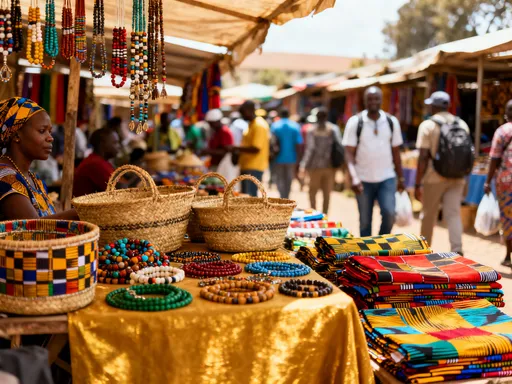
Every stall tells a story. One vendor displays saffron in tiny glass vials, explaining how the delicate threads are hand-harvested in the Taliouine region. Another roasts almonds and hazelnuts in copper pans, the scent mingling with the earthy aroma of dried figs and dates. Women in headscarves bargain gently over bundles of parsley and cilantro, their voices rising and falling like a familiar melody. This is not performance—it’s daily life, unfiltered and authentic. There are no souvenir tchotchkes here, no overpriced trinkets. Every item has a purpose, and nearly everything is edible.
Beyond the Central Market, smaller souqs weave through residential streets, each specializing in a particular food group. In one alley, butchers hang sides of beef in shaded doorways; in another, bakers pull round loaves of khobz from clay ovens fueled by olive wood. These markets are more than places to shop—they are social spaces where neighbors exchange news, children dart between stalls, and recipes are passed down through gestures and taste. To walk through them is to witness the seamless integration of food, culture, and community. The rhythm of Casablanca’s life is measured not by clocks but by meal times, market hours, and the rising steam of morning bread.
Street Food: The Pulse You Can Taste
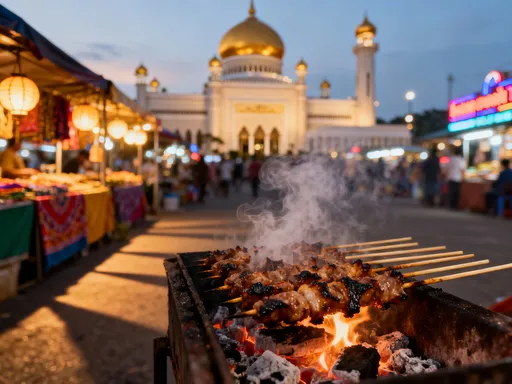
As daylight fades, a new energy takes hold. The city’s street food scene comes alive, transforming quiet corners and bustling intersections into open-air dining rooms. Unlike flash-in-the-pan food truck trends, Casablanca’s street cuisine is a centuries-old tradition, refined through generations. At dusk, grills ignite, oil heats in deep pots, and the scent of frying dough fills the air. In residential neighborhoods like Sidi Belyout and downtown near the Poste Centrale, clusters of food carts draw crowds of workers, students, and families.
One of the most beloved offerings is maakouda—golden potato patties, spiced with garlic and parsley, then deep-fried until crisp. Served in a pocket of warm bread with a smear of spicy harissa, it’s a humble yet satisfying meal that costs only a few dirhams. Equally popular are briouats, delicate triangles of filo dough stuffed with minced meat, cheese, or honeyed almonds, then fried to a shatteringly crisp finish. Vendors fold them quickly, wrapping each in paper with a practiced flick of the wrist. Nearby, large pots of harira soup simmer through the evening—rich with lentils, tomatoes, and vermicelli, it’s a staple during Ramadan but enjoyed year-round for its comfort and depth of flavor.
What makes these experiences remarkable is not just the food but the atmosphere. Eating on the street here feels safe, welcoming, and natural. There’s no stigma, no hesitation. Parents share bites with children, couples sit on low stools laughing between sips of sugary mint tea, and solo diners nod in quiet appreciation. The lighting is often simple—overhead bulbs or the glow of phone screens—but the warmth comes from the people. These street vendors are not anonymous; many have served the same block for decades, recognized by regulars who greet them by name. In this way, street food becomes a thread of continuity, a daily ritual that binds the city together one bite at a time.
Where Cityscape Meets Dining: Rooftops and Ocean Views
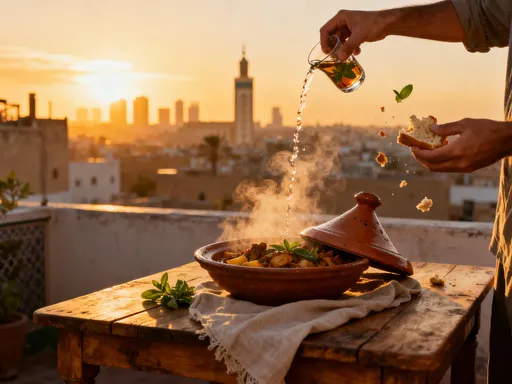
While the streets pulse with energy, a quieter, more contemplative side of Casablanca unfolds at elevation. In the Art Deco district, where 1930s French-Moroccan architecture lines wide boulevards, rooftop cafes offer a different kind of immersion. These spaces blend style and serenity, allowing diners to observe the city from above—its rooftops tiled in red and terracotta, its minarets rising into the pale blue sky. As the sun begins its descent, tables fill with locals and visitors sipping fresh orange juice, savoring salads, and sharing plates of grilled meats and vegetables.
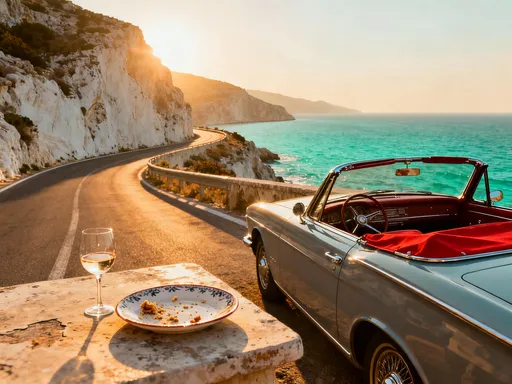
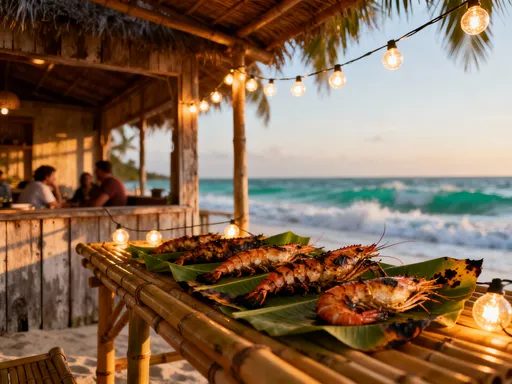
One of the most memorable dining experiences unfolds near the Ain Diab Corniche, a seaside promenade where the Atlantic breeze carries the scent of salt and jasmine. Here, a family-run restaurant perched on a low cliff serves some of the city’s finest seafood. At sunset, the sky melts into hues of apricot and lavender, and the ocean shimmers like liquid silver. A simple meal—grilled sardines marinated in cumin and lemon, a salad of tomatoes, olives, and preserved lemon, a side of couscous steamed to perfection—becomes a celebration of place and season.
This contrast—between the lively streets below and the calm above—captures the dual nature of Casablanca. On the ground, life is immediate, tactile, and fast-moving. From above, it slows, allowing space for reflection. Rooftop dining isn’t about escape; it’s about perspective. It’s where the city’s contradictions coexist: tradition and modernity, chaos and calm, flavor and finesse. And as the last light fades and the call to prayer echoes once more, there’s a quiet understanding: this is not just a meal. It’s a moment of harmony between the human and the elemental, the urban and the eternal.
Home Cooking: Invited Into Local Kitchens
For a deeper connection, some travelers choose to go beyond markets and restaurants and into the homes of Casablanca residents. Through verified cultural tourism programs, visitors can join a local family for a shared meal, participating in the preparation from start to finish. These experiences are not staged performances but genuine acts of hospitality, rooted in the Moroccan value of *karama*—generosity. One such afternoon begins in a modest apartment in the Maârif district, where a mother and daughter welcome guests with trays of mint tea and bowls of fresh fruit.
The kitchen becomes a classroom. Under gentle guidance, guests learn to knead semolina dough for msemen, roll it thin, and fold it into layered squares. They help chop onions and fresh herbs for a chicken tagine, adding spices measured not by teaspoons but by scent and memory. The tagine pot, with its conical lid, is placed over a low flame, where it will simmer for hours, allowing flavors to deepen and meld. As the aroma fills the apartment, stories are shared—about childhood meals, holiday traditions, and the importance of feeding others with love.
When the meal is finally served, it’s done with ritual. Hands are washed, cushions are arranged around a low table, and the tagine is lifted with care. The chicken falls easily from the bone, bathed in a sauce of olives, preserved lemons, and saffron. Bread is torn by hand, used to scoop up every last drop. Conversation flows easily, punctuated by laughter and moments of quiet appreciation. In this intimate setting, food becomes more than sustenance—it’s a bridge between cultures, a language of care. To be invited into a home is to be seen, and in that seeing, a deeper truth emerges: the heart of Casablanca beats strongest not in its monuments, but in its kitchens.
Modern Twists: When Tradition Meets Trend
While tradition remains central, a new generation of chefs and entrepreneurs is reimagining Moroccan flavors for contemporary tastes. In neighborhoods like Gauthier and downtown Casablanca, modern cafes and bistros offer a fresh take on heritage cuisine. These spaces are not replacements for the old but thoughtful evolutions—where respect for the past meets creative experimentation. The decor blends minimalist design with traditional zellige tilework, and the music is a soft mix of jazz and Andalusian melodies.
At one popular spot, a barista serves a flat white infused with za’atar, the earthy thyme-based spice blend adding a subtle depth to the espresso. Another café offers desserts made with argan oil, a Moroccan superfood, in delicate financiers and almond cakes. A fusion restaurant presents a deconstructed pastilla—layers of spiced pigeon (or chicken) and almonds reimagined as a savory tart, topped with flaky phyllo shards. These dishes do not erase tradition; they honor it by asking, “What else is possible?”
What stands out in these modern spaces is the balance they strike. Innovation is present, but never at the expense of authenticity. Ingredients are still sourced locally—olives from the Atlas foothills, honey from Berber cooperatives, seafood from Atlantic ports. Menus often include stories about the farmers and artisans behind the food, reinforcing a sense of connection. Young chefs speak with reverence about their grandmothers’ recipes, acknowledging that every new creation is built on a foundation of generations. In this way, Casablanca’s culinary future is not a departure but a continuation—evolving, yes, but always rooted in place, people, and pride.
Eating With Purpose: How Food Shapes the City’s Future
Beyond pleasure and tradition, food in Casablanca plays a vital role in shaping the city’s social and economic landscape. A growing awareness of sustainability is influencing how food is produced, sold, and consumed. In markets, many vendors now use paper or reusable containers instead of plastic, responding to both environmental concerns and consumer demand. Community kitchens and women’s cooperatives are gaining recognition, offering training and income to those historically underrepresented in the formal economy.
Small businesses are thriving thanks to food-focused tourism. A bakery in the Habous Quarter, once struggling to attract customers, now hosts weekly cooking demonstrations for visitors. A group of women in Sidi Bernoussi run a collective that produces organic argan oil and traditional sweets, selling both locally and online. Guided food walks, led by residents, provide not only income but also a platform for cultural exchange. These initiatives do more than sustain livelihoods—they preserve knowledge, empower communities, and ensure that Casablanca’s culinary heritage remains alive and accessible.
For the traveler, this means every meal has the potential to be an act of support. Choosing a family-run stall over a chain restaurant, buying spices directly from a market vendor, or joining a home cooking experience—all of these choices contribute to a more equitable and resilient food system. Conscious eating is not about perfection; it’s about awareness. It’s understanding that the tagine on your plate is part of a larger story—one of labor, land, and legacy. By eating with intention, visitors become part of that story, helping to sustain the very culture they’ve come to experience.
Casablanca’s soul isn’t just in its architecture or coastline—it’s served on a plate, shared over laughter, and simmered in tradition. To eat here is to truly see the city. Every flavor tells a story of resilience, creativity, and connection. From the first bite of msemen on a sunlit street to the final sip of mint tea on a rooftop at dusk, the journey is one of discovery. It’s not about finding the most famous dish or the highest-rated restaurant. It’s about presence—about slowing down, opening your senses, and letting the city reveal itself through its food. In Casablanca, every meal is an invitation: to taste, to listen, to belong. And in that invitation, there is a deeper truth—that the most meaningful travels are not measured in miles, but in moments of shared humanity, one plate at a time.