You Won’t Believe These Hidden Cityscapes in the Scottish Highlands
When you think of the Scottish Highlands, sweeping glens and ancient castles probably come to mind—but not cityscapes. Yet tucked between the misty mountains and wild lochs are unexpected pockets of urban charm, where stone buildings cling to hillsides and harbors glow at dusk. I was stunned to find modern life thriving in such raw nature. These hidden cityscapes blend history, culture, and breathtaking views in ways you’d never expect. Let me take you through the quieter, lesser-known side of the Highlands—where nature meets human spirit in surprising harmony.
Reimagining the Highlands: Beyond the Wild Landscape
The Scottish Highlands are often portrayed as a vast, untamed wilderness—a land of jagged peaks, silent moors, and empty roads stretching into the horizon. This image, while powerful, overlooks a quieter truth: human presence has shaped this region for centuries, not in defiance of nature, but in conversation with it. Scattered across this dramatic terrain are small urban centers—historic towns, port villages, and regional hubs—that form subtle but meaningful cityscapes. These are not metropolises, nor do they aim to be. Instead, they are intimate settlements where architecture, community, and landscape intertwine in ways that feel both enduring and delicate.
Travelers often pass through these towns without fully seeing them, en route to more celebrated natural attractions. A stop in Inverness might be brief, a chance to refuel before heading to Loch Ness. Ullapool may register only as a ferry departure point. Yet within these places lies a richness of character that rewards closer attention. Their streets tell stories of trade, migration, and resilience. Their buildings—many centuries old—bear the marks of wind, rain, and time, yet remain functional, lived-in, and full of warmth. The very scale of these settlements invites a different kind of exploration, one that values slowness and observation over speed and checklist tourism.
What defines a cityscape in such a remote region? It is not skyscrapers or traffic, but the presence of structured human life—rows of houses stepping down to water, harbor cranes silhouetted at sunset, church spires piercing the morning mist. These elements form visual rhythms, patterns that emerge when nature and habitation coexist. The Highlands’ unique geography ensures that no town rises without compromise. Hills dictate street layouts. Lochs define boundaries. Weather shapes materials. As a result, each settlement feels organically grown rather than imposed, a testament to adaptation and continuity. Recognizing these places as cityscapes does not diminish their wild surroundings—it deepens our appreciation for how life persists, even flourishes, in one of Europe’s most rugged environments.
The Allure of Highland Towns: Where Nature Frames Civilization
Highland towns possess a distinct aesthetic, one where built environments are never allowed to dominate. Instead, they are framed by the land and sky, appearing almost as extensions of the landscape itself. In places like Fort William, nestled at the foot of Ben Nevis, the tallest mountain in the UK, the town’s low-rise buildings seem to huddle for protection, their dark roofs blending with the shadowed slopes. Yet within this modest footprint lies a vibrant daily rhythm—shop doors opening, cyclists heading toward trailheads, steam rising from café windows. This interplay of stillness and motion gives Highland cityscapes their unique emotional texture: quiet, but never lifeless.
Architecturally, these towns favor durability over grandeur. Granite, slate, and timber are common materials, chosen not for style but survival. Narrow streets wind organically, often following ancient paths or shoreline contours. In Ullapool, the harbor curves like a crooked smile, lined with whitewashed buildings that glow in the northern light. Fishing boats bob beside passenger ferries, their ropes creaking against wooden piers. The scent of salt and diesel lingers in the air, mingling with the aroma of freshly baked bread from a nearby bakery. These sensory details are not incidental—they are essential to the experience of the place, grounding the visitor in the reality of coastal life.
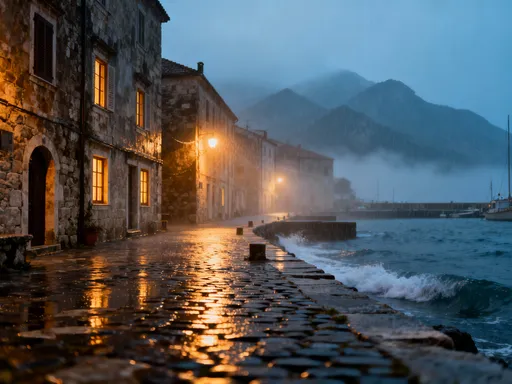
What makes these towns visually compelling is not their size, but their relationship to their surroundings. A single hilltop path can reveal an entire settlement laid out below, like a diorama framed by mountains. In the early morning, fog may soften rooftops into ghostly outlines, only to burn away by midday, revealing bright doorways and flower boxes. In the evening, warm light spills from pub windows, reflecting on wet streets, creating a sense of refuge against the vast, cooling landscape. These moments of contrast—between shelter and exposure, warmth and chill, stillness and activity—define the emotional resonance of Highland urban spaces. They are not escapes from nature, but places where nature is always present, shaping every aspect of life.
Inverness: The Quiet Capital with a Highland Soul
As the largest city in the Highlands, Inverness occupies a unique position—officially urban, yet deeply rooted in Highland identity. With a population of just over 60,000, it is more akin to a large town than a city in the conventional sense. Its skyline is modest: a cathedral spire, the clock tower of the townhouse, and a few low-rise buildings clustered near the River Ness. There are no high-rises, no sprawling suburbs—just a compact, walkable center where history and modernity coexist with quiet grace. Inverness does not announce itself; it reveals itself gradually, through details.
Walking along the River Ness, one gains a sense of the city’s gentle rhythm. The water moves slowly, reflecting the sky and the arched stone bridges that cross it. On the east bank, the Inverness Cathedral rises with understated elegance, its red sandstone glowing in the late afternoon sun. Nearby, the Eastgate Shopping Centre blends into the streetscape without dominating it, a balance not always achieved in other regional capitals. Pedestrianized zones like Academy Street and Church Street encourage unhurried exploration, allowing visitors to notice carved lintels, tucked-away bookshops, and the occasional street musician playing traditional tunes on a fiddle.
What sets Inverness apart is its role as a cultural and logistical hub. It is a place of arrival and departure—trains from the south terminate here, buses fan out to remote glens, and ferries depart for the Northern Isles. Yet amid this movement, the city maintains a calm atmosphere. Museums like the Inverness Museum and Art Gallery offer insights into Highland history without the crowds of larger institutions. The local theater hosts performances ranging from Gaelic music to contemporary drama, reflecting a community that values both tradition and innovation. Even the food scene, with its emphasis on local produce and seasonal menus, speaks to a deeper connection with the land. Inverness may not dazzle at first glance, but its quiet confidence, its ability to serve as both gateway and home, makes it a defining example of Highland urban life.
Coastal Gems: Ullapool and Tobermory’s Colorful Contrast
On the western and northern fringes of the Highlands, coastal towns offer some of the most visually striking cityscapes in the region. Ullapool, perched on the shores of Loch Broom, is a prime example. Founded in the late 18th century as a herring port, it retains the orderly layout of a planned settlement, with a long harborfront and a grid of narrow streets climbing the hillside. The buildings are predominantly white or cream, their flat fronts facing the water, as if watching for returning boats. Today, fishing remains important, but tourism has become equally vital. The arrival of the ferry to Stornoway brings a daily pulse of activity—luggage carts rolling, families reuniting, cyclists preparing for the journey ahead.
Ullapool’s charm lies in its authenticity. There are no souvenir shops selling mass-produced tartan, no overpriced theme pubs. Instead, visitors find a working town with a strong cultural heartbeat. The Beacon Centre, housed in a former herring station, hosts art exhibitions, film screenings, and live music, often featuring local musicians. A short walk from the harbor, the Corrieshalloch Gorge offers a dramatic natural counterpoint, but it is the town itself that lingers in memory—the way light plays on the loch at sunset, the sound of gulls circling above the pier, the warmth of a pub fire on a rainy afternoon.
Further south, on the Isle of Mull, lies Tobermory—a town so vivid it almost seems unreal. Its most famous feature is the row of brightly painted buildings lining the harbor, their colors ranging from sunflower yellow to deep cobalt blue. This rainbow facade, often photographed and widely reproduced on postcards, could easily feel staged, but in context, it feels natural, even necessary. Against the muted greens and grays of the surrounding hills, the colors are a celebration of human presence. Tobermory is small—fewer than 700 residents—but it functions as a full-service community, with a primary school, a distillery, and a marina filled with sailing yachts and fishing vessels.
Like Ullapool, Tobermory is isolated, accessible only by ferry or a long drive. This remoteness enhances its appeal, creating a sense of discovery for those who arrive. There are no traffic lights, no chain stores, no hurry. Life moves at the pace of tides and weather. Yet within this simplicity lies richness: a bookstore specializing in Scottish literature, a bakery known for its oatcakes, a small museum detailing the island’s maritime history. These towns prove that urban character does not depend on size, but on depth—on the layers of history, culture, and daily life that accumulate over time.
Hidden Urban Corners: Smaller Settlements with Big Character
Beyond the better-known towns lie smaller settlements, often overlooked but rich in atmosphere. Plockton, on the shores of Loch Carron, is one such place. With its sheltered bay and mild microclimate, it supports palm-like trees—actually monkey puzzle trees planted in the 19th century—that give the village an almost Mediterranean air. The waterfront is lined with crooked piers and pastel-colored cottages, their windows reflecting the still water. A single main street curves along the shore, dotted with a hotel, a seafood shack, and a quiet harbor where local boats moor after a day’s work. Plockton does not offer nightlife or shopping, but it offers something rarer: stillness, beauty, and a sense of time suspended.
Dingwall, in the central Highlands, presents a different kind of quiet charm. Once a royal burgh, it retains a historic core with cobbled lanes and old market squares. The town sits at the meeting point of several glens, making it a natural crossroads. Its skyline is defined by the remains of a medieval castle and the spire of St. Clement’s Church. Though small, Dingwall functions as a service center for surrounding rural communities, with schools, medical facilities, and a growing reputation for local crafts and food production. Walking its streets, one senses continuity—a place that has evolved without losing its essence.
Fort Augustus, at the southern tip of Loch Ness, is another example of a micro-urban space shaped by geography and history. Built around the Caledonian Canal, its streets follow the waterway, lined with stone buildings that once housed lock keepers, traders, and travelers. Today, the town caters to tourists, but not excessively. A few cafes and gift shops coexist with family homes and a small monastery. The peacefulness of the canal contrasts with the deep, mysterious waters of Loch Ness nearby, yet Fort Augustus feels grounded, unhurried. These smaller settlements—Plockton, Dingwall, Fort Augustus—may not appear on every itinerary, but they embody the true spirit of Highland cityscapes: modest in scale, rich in character, and deeply connected to their environment.
The Role of Light, Weather, and Season in Shaping the View
In the Scottish Highlands, light and weather are not background conditions—they are active participants in the experience of place. A town seen in midday rain will look entirely different at golden hour, when low sunlight gilds stone walls and turns puddles into mirrors. Winter brings a hush, with snow-dusted rooftops and breath visible in the air, while summer offers long twilight hours, when the sky remains soft and luminous well past nine o’clock. These changes do not merely alter appearance; they transform mood, making the same streets feel mystical one day and cozy the next.
Spring and autumn are particularly dynamic. In April and May, fresh greenery softens the edges of buildings, and the air carries the scent of damp earth and blooming shrubs. By September and October, the light slants more dramatically, casting long shadows and highlighting textures—rough stone, peeling paint, rusted railings. Rain, so often seen as a travel inconvenience, can enhance visual richness. Wet cobblestones reflect neon signs and streetlamps, doubling the light and adding depth to night scenes. Fog, too, has its beauty, wrapping hills and rooftops in mystery, revealing only fragments of the town at a time.
For those seeking to truly see these cityscapes, timing is essential. Early morning walks often yield the clearest views, before clouds roll in or ferry traffic begins. Sunset, especially in summer, offers a prolonged window of warm, diffused light ideal for photography. But perhaps the most rewarding moments come unexpectedly—a sudden break in the clouds, a shaft of sunlight hitting a church steeple, a rainbow arching over a harbor. These fleeting conditions remind us that the Highlands are not a static backdrop, but a living, breathing environment where every visit is unique. Understanding this deepens appreciation, turning casual observation into meaningful connection.
Travel Tips for Experiencing Highland Cityscapes Authentically
To fully appreciate these hidden cityscapes, a thoughtful approach to travel is essential. Renting a car offers the greatest flexibility, allowing access to remote towns and the freedom to explore at one’s own pace. Public transport, while available, often follows limited routes and schedules, making spontaneous detours difficult. A personal vehicle enables early morning arrivals, quiet harbor walks before crowds appear, and the ability to follow local recommendations—like a hidden viewpoint above Ullapool or a quiet beach near Plockton.
Accommodation choices also shape the experience. Staying in family-run B&Bs or small guesthouses, rather than chain hotels, fosters connection with local hosts who can offer insights not found in guidebooks. Many owners have lived in the area for decades and can recommend the best fish and chips, the quietest walking path, or the ideal spot to watch the sunset. These personal touches transform a visit from sightseeing to immersion.
Timing matters. Peak summer months bring longer days but also more tourists, especially in ferry towns like Mallaig or Oban. Visiting in late spring, early autumn, or even winter can offer fewer crowds and more atmospheric conditions—misty mornings, snow-dusted streets, the warmth of a pub fire. These seasons reveal the Highlands not as a postcard, but as a living place.
Walking is the best way to discover hidden angles. Hilltop trails above towns often provide panoramic views, while quiet harborside paths reveal daily life—boats being repaired, nets mended, children playing near the water. Carrying a camera is natural, but so is putting it down, simply observing. These towns are not performances for visitors; they are homes. Respecting that means being mindful—keeping noise down, supporting local businesses, and avoiding intrusive photography. When travelers approach these places with curiosity and care, they are often rewarded with genuine moments of connection.
Conclusion: Finding Beauty in the Unseen Corners
The hidden cityscapes of the Scottish Highlands invite us to look beyond the obvious. They challenge the notion that beauty exists only in untouched wilderness, reminding us that human life, too, is part of the landscape. In the curve of a harbor, the color of a door, the glow of a window at dusk, we find stories of resilience, adaptation, and quiet joy. These towns are not escapes from the world, but expressions of how people have built lives within it, shaped by geography, history, and community.
To experience them is to slow down, to notice details, to embrace uncertainty. A sudden downpour may ruin a planned photo, but it may also reveal a street transformed by reflection. A closed shop may disappoint, but a conversation with a local may offer something more valuable. The true reward of visiting these places is not in checking them off a list, but in allowing them to change how we see—not just the Highlands, but the idea of what a meaningful journey can be.
So the next time you plan a trip to the Highlands, consider not just the mountains and lochs, but the towns that nestle beside them. Walk their streets at dawn. Sit by their harbors at dusk. Listen to the rhythm of daily life. Let yourself be surprised by the warmth of a small-town pub, the kindness of a stranger, the beauty of a place that asks for nothing but offers everything. In these quiet urban corners, you may find the most enduring kind of wonder—not loud or flashy, but deep, lasting, and true.